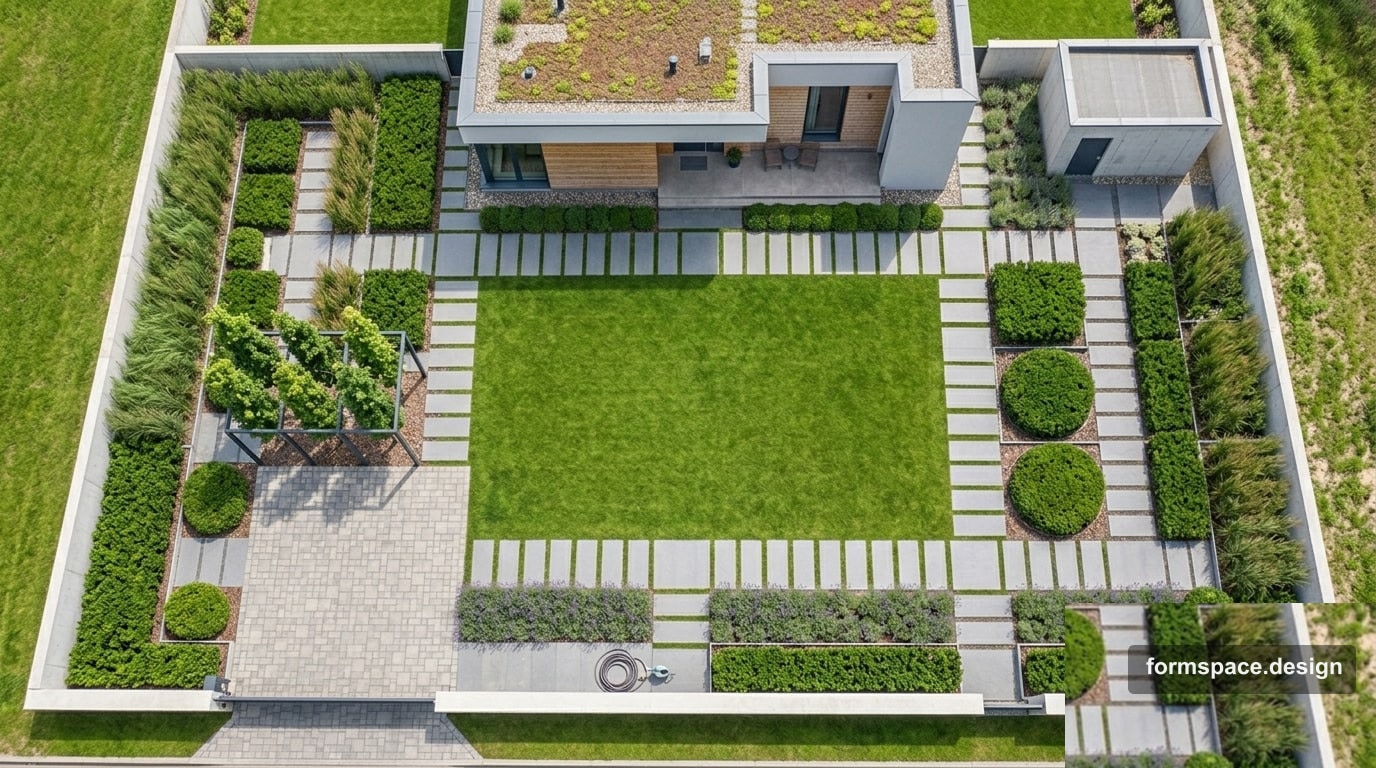
Minimalismus oder Provence auf 6 Hektar: was Sie wählen sollten
Vergleich zweier Stile auf einer typischen 6 Hektar großen Fläche: Zonen, Materialien, Pflege und wann welche Option geeignet ist. Links zu vorgefertigten formspace-Schaltkreisen.
Kurze Antwort: Minimalismus und Provence auf 6 Hektar lösen ein Problem auf unterschiedliche Weise. Minimalismus sorgt für reine Geometrie und große Flächen. Die Provence fügt warme Materialien, Gräser und einen sanften Gartencharakter hinzu. Sie sollten basierend auf der Fassade des Hauses, der Pflege und dem Lebensszenario wählen.
Vorgefertigte Pläne: Minimalismus auf 6 Hektar und Provence auf 6 Hektar.
Idee der Wahl
In einem kleinen Bereich kann der Stil nicht getrennt vom Layout gewählt werden. 6 Hektar sind schnell überlastet: Haus, Parkplatz, Terrasse, Wege, Landwirtschaft, Pflanzungen und manchmal auch der Gemüsegarten nehmen bereits fast das gesamte Feld ein.
Minimalismus ist gut, wenn Sie Ordnung, einen einfachen Kostenvoranschlag und einen klaren Plan benötigen. Die Provence ist besser, wo das Gefühl eines Gartens, einer warmen Terrasse, Kräuter und Blüte im Vordergrund steht.
Vergleich
| Kriterium | Minimalismus | Provence |
|---|---|---|
| Achse | direkt, streng | leise, mit Pausen |
| Rasen | ein großes Fragment | weniger, mehr Kräuter |
| Materialien | Terrassendielen, Beton, grauer Stein | heller Kies, Holz, Terrakotta |
| Pflanzen | 2–3 Typen, wiederholen | Kräuter, Lavendel, Büschel |
| Pflege | niedrig oder mittel | durchschnittlich, besonders bei heißem Wetter |
| Fassade | modern, skandinavisch | warm, ländlich, sanft-klassisch |
Materialien und Zonen
Wählen Sie für Minimalismus eine große Platte, einen flachen Bodenbelag, einfache Ränder und eine begrenzte Palette. Es ist besser, die Zonen rechteckig zu gestalten: Terrasse, Rasen, Pufferbepflanzung, Nutznische. Ein guter Leitfaden ist funktionale Zonierung der Site.
Für die Provence eignen sich heller Kies, Holz, warme Fliesen, Blumentöpfe, Kräuter und duftende Bepflanzungen. Aber auf 6 Hektar soll die Provence auch Materialien und Pflanzen wiederholen.
Schritte in formspace.design
- Zeichnen Sie in 1,3 den tatsächlichen Umriss und das Haus, ohne vorher einen Stil auszuwählen.
- Legen Sie in 1,5 die grundlegenden Zonen fest: Eingang, Terrasse, offenes Feld, Bepflanzungen, Landwirtschaft.
- Machen Sie in 1,1 zwei Abfrageoptionen: „Minimalismus, große Flächen, geringer Pflegeaufwand“ und „Provence, warme Materialien, Kräuter, sanfte Bepflanzung“.
- Duplizieren Sie in 1,6 den Plan und ändern Sie die Materialien: Dies erleichtert den Vergleich des Stils, ohne über die Lage der Zonen zu streiten.
- Überprüfen Sie die Bereiche: Wenn zu viele Zierbepflanzungen vorhanden sind, kehren Sie zu den Zonen 5–7 zurück.
Weitere Details zum Arbeiten mit Vorlagen finden Sie im Artikel So verwenden Sie eine Vorlage nach dem Artikel.
Häufige Fehler
- Wählen Sie einen Stil nur basierend auf dem Bild, ohne die Fassade des Hauses zu berücksichtigen.
- Mischen Sie minimalistischen Beton, provenzalische Terrakotta und zufällige dekorative Steine.
- Erstellen Sie 12–15 Zonen auf 6 Acres: Beide Stile verlieren an Klarheit.
- Pflanzen Sie Provence, aber sorgen Sie nicht für Bewässerung und saisonalen Schnitt.
- Machen Sie den Minimalismus zu leer: ohne Schatten, Bepflanzung und Entspannungsszenarien.
FAQ
Ist es möglich, Minimalismus und Provence zu kombinieren?
Ja, aber durch einen führenden Rahmen. Zum Beispiel: minimalistische Zonengeometrie und warme provenzalische Materialien auf der Terrasse.
Was ist günstiger?
Minimalismus mit einfacher Farbpalette und wenigen Pflanzen ist oft günstiger. Aber eine große, hochwertige Platte oder Terrasse kann das Budget in die Höhe treiben.
Was ist pflegeleichter?
Minimalismus fällt meist leichter, wenn wenig Rasen und Pflanzen vorhanden sind. Die Provence erfordert während der Trockenzeit mehr Aufmerksamkeit für Kräuter, Blüte und Bewässerung.
Was ist, wenn die Familie streitet?
Erstellen Sie in formspace.design zwei Versionen desselben Plans und vergleichen Sie nicht den Stil, sondern die Szenarien: wo man sitzt, wie man geht, was man serviert.
Gibt es Alternativen?
Ja: klassischer Garten, japanischer Garten oder freier naturalistischer Stil.
Zusammenfassung
Wählen Sie Minimalismus für Klarheit, große Flächen und weniger Wartungsaufwand. Provence – für die Atmosphäre, warme Materialien und Gartenstimmung. Stellen Sie zunächst die Zonen zusammen und ändern Sie dann den Stil der Materialien und Bepflanzungen. Plan starten oder Ansätze in CAD oder Online-Planer vergleichen.
Veröffentlicht:

Volodymyr Vybornyi
Landschaftsdesigner, Gründer von https://formspace.design/
Schreibt über Landschaftsdesign, Business und moderne computergestützte Planungswerkzeuge für Landschaften – einschließlich KI.