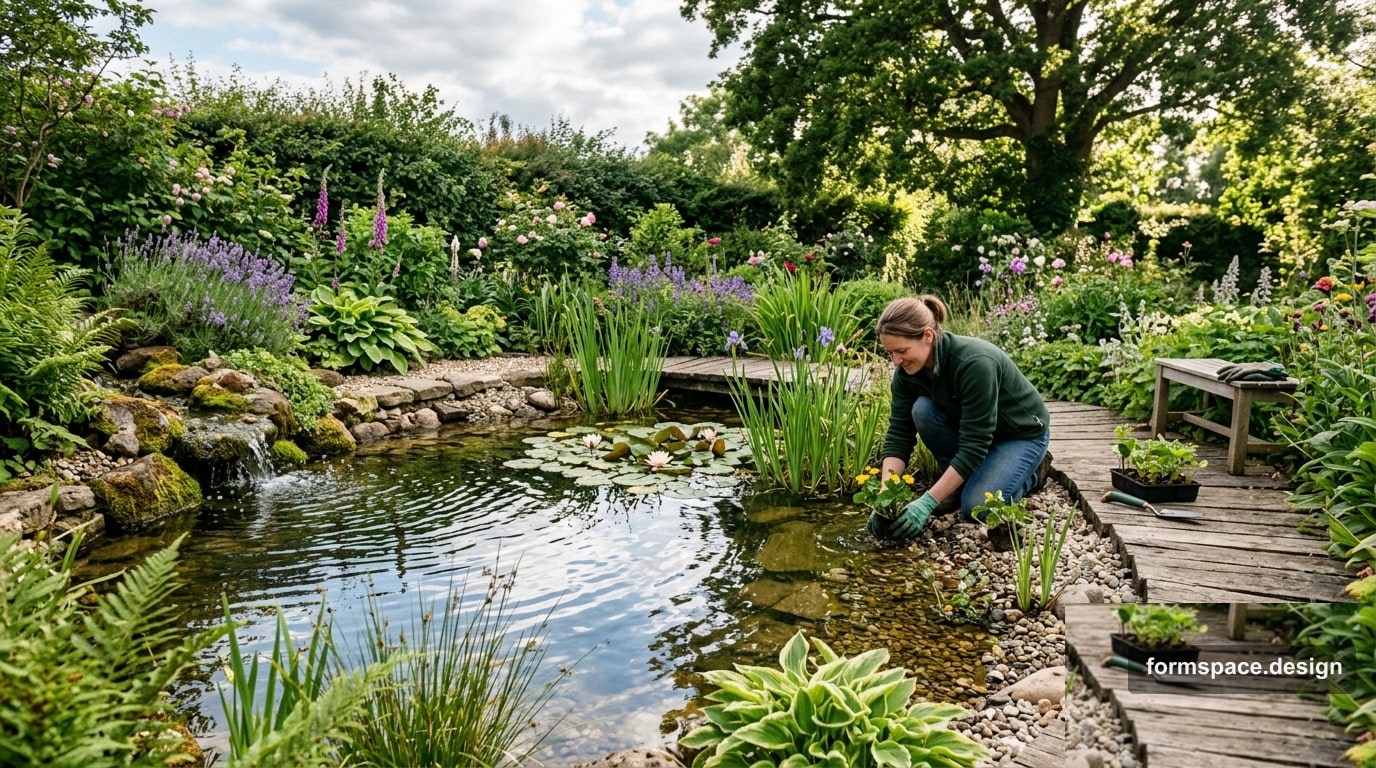
Gewässer auf dem Grundstück: Typen, Nutzen, Fehler und Bauablauf
Zierteich, Naturbad, Fischteich und natürliches Gewässer in der Nähe: Unterschiede, teuerste Fehler und wie Aushub Bäume schädigt.
Kurze Antwort: Ein Wasserbecken wird mit Gelände, Sicherheit, Strom und Wartung geplant, nicht erst am Ende als Dekoschale. Von schmutzigem Ablaufwasser fernhalten, technischen Zugang lassen und bei Kindern Sichtbarkeit sowie physische Sicherung priorisieren.
Gewässertypen im Privatgarten
| Typ | Tiefe (Richtwert) | Reinigung | Zweck |
|---|---|---|---|
| Zierteich | 0,5–1,0 m | Filter, UV, Skimmer | Blick, Spiegelung, kleines Habitat |
| Naturbad / Ökoteich | 1,5–2,5 m (Schwimmen) | Bioplateau ohne Chlor | Baden + Pflanzen |
| Fischteich (z. B. Koi) | ≥1,5–2,0 m | Starke Biofiltration und Belüftung | Fische ganzjährig |
| Natürliches Gewässer nahe | wie vorgefunden | Selbstreinigung des Laufs | Blick und Hydrogeologie |
Kleine Zierteiche hängen fast immer an Technik. Naturbäder teilen die Fläche in Schwimmzone und Regenerationszone. Am Fluss diktiert oft das Grundwasser, was man graben darf.
Nutzen — wenn das System hält
- milderes Mikroklima am Ufer;
- Biodiversität mit lebender Filterung;
- Baden ohne „Chlor-Ästhetik“;
- visueller Anker der Planung.
Nutzen entfällt, wenn der ganze Hof mit Dünger in die Schale läuft oder ein dunkler Vollzaun die Luft über dem Wasser staut.
So arbeitet das Bioplateau
- Mechanik — gewaschener Kies 20–40 mm hält Feinteile.
- Bakterien — auf Stein und Wurzeln mineralisieren Organik.
- Pflanzen — nehmen Nitrat und Phosphat auf.
Richtwert: Regeneration ≥35–40 % der Wasserfläche, ideal nahe 1:1 zur Schwimmzone; Tiefe ~30–50 cm, Kies ~25–30 cm. Pflege: Frühjahrsschnitt, Herbstnetze, Kieswäsche alle 2–3 Jahre — kein Algizid „für alles“.
Fehler 1. Becken in der Senke „weniger baggern“
Senken sammeln Regen und Schmelzwasser: Erde, Dünger, Herbizide, Abspülung von Belägen. Im geschlossenen Teich: Eutrophierung und Fischsterben. Besser höher liegen und Oberflächenabfluss abfangen, bevor er die Kante erreicht.
Fehler 2. 6+ Stunden Sonne oder Bäume am Rand
Vollsonne → Überhitzung und Algenblüten. Große Laubbäume → Wurzeln zerreißen Folien, Laub raubt Sauerstoff. Kompromiss: Teilschatten ohne Laubdach und ohne aggressive Wurzeln an der Abdichtung.
Fehler 3. Aushub wird zur „Hundsgrab“-Alpinum
Ohne Drainageschicht, mit Mischgestein und aggressiven Bodendeckern sauert die Komposition. Siehe auch kritische Landschaftsfehler.
Fehler 4. Dunkler Vollzaun am Wasser
Dunkles Blech heizt, sperrt Wind und staut Luft — das Wasser erwärmt sich schneller. Hellere, offenere Segmente helfen oft dem Mikroklima.
Fehler 5. Maschinen töten Bäume „leise“ in 2–3 Jahren
Ohne Wurzelschutz: Verdichtung und gekappte Ankerwurzeln. Kronensymptome kommen verzögert. Vor dem Bagger: Stammschutz, Zaun mindestens bis Kronentraufe, temporäre Fahrbahnen, Handarbeit nahe Wurzeln.
Am natürlichen Gewässer — lokale Regeln
Prüfen Sie lokal Wasserschutz- und Uferstreifen. Praxisnahe Orientierung:
- künstlichen Teich hydraulisch getrennt von natürlichen Läufen halten (kein Bachdamm);
- öffentliche Uferstreifen nicht mit Kapitalbauten abriegeln;
- Abstände und Hangregeln vor Bau und Aushub prüfen;
- oft ~3 m zum Nachbarn gegen Feuchtestreit — laut lokalem Recht.
Szenario: Grundstück am Wasser.
Bauablauf
- Baumschutz und Maschinenwege.
- Oberboden getrennt von Ton lagern.
- Aushub, sichere Böschungen, Drainage und Regenwasser.
- Abdichtung und Ufer.
- Kreislauf, Skimmer, Leerrohre.
- Stege, Bauwerke, Beläge.
- Pflanzung und Rasen nach Schwerarbeiten.
Checkliste vor dem Angebot
- Typ passt zum Szenario (Blick / Baden / Fisch).
- Becken ist keine Abflussfalle.
- Schatten- und Laubplan vorhanden.
- Naturbad: Regeneration ≥35–40 %.
- Bäume geschützt.
- Lokale Puffer am natürlichen Wasser geprüft.
- In formspace.design liegt der Teich in Freizeitzonen.
Blöcke 1.5–1.6: Spiegel, Bioplateau, Rundweg, Technikzugang. Grill/Terrasse: Pool + Grill.
FAQ
Naturbad vs. Standardpool?
Standard: Chemie und Schale. Naturbad: Kreislauf über Pflanzen und Kies, ohne Chlor als Hauptregime.
Warum blüht der Teich trotz Filter?
Zu viel Sonne, Rasendünger, Laub, zu kleine Pflanzenzone.
Darf ich beliebig aus dem Brunnen füllen?
Grundwasserentnahme ist lokal geregelt — Limits und Verdunstungsersatz prüfen.
Start in formspace.design?
Grenze, Haus, Gefälle und Abfluss zuerst, dann Teichfläche. Schönes Wasserrender ohne Abflussplan ist eine Falle.
Fazit
Ein Gewässer lohnt, wenn Typ, Filterung, Gelände und Ablauf zusammenpassen. Teure Fehler: Senkenfalle, Hitze und Laub, Maschinen auf Wurzeln, Chemie statt Bioplateau, ignorierte Regeln am natürlichen Wasser.
Weiter: kritische Landschaftsfehler oder Pool, Grill und Terrasse trennen.
Veröffentlicht:

Volodymyr Vybornyi
Landschaftsdesigner, Gründer von https://formspace.design/
Schreibt über Landschaftsdesign, Business und moderne computergestützte Planungswerkzeuge für Landschaften – einschließlich KI.