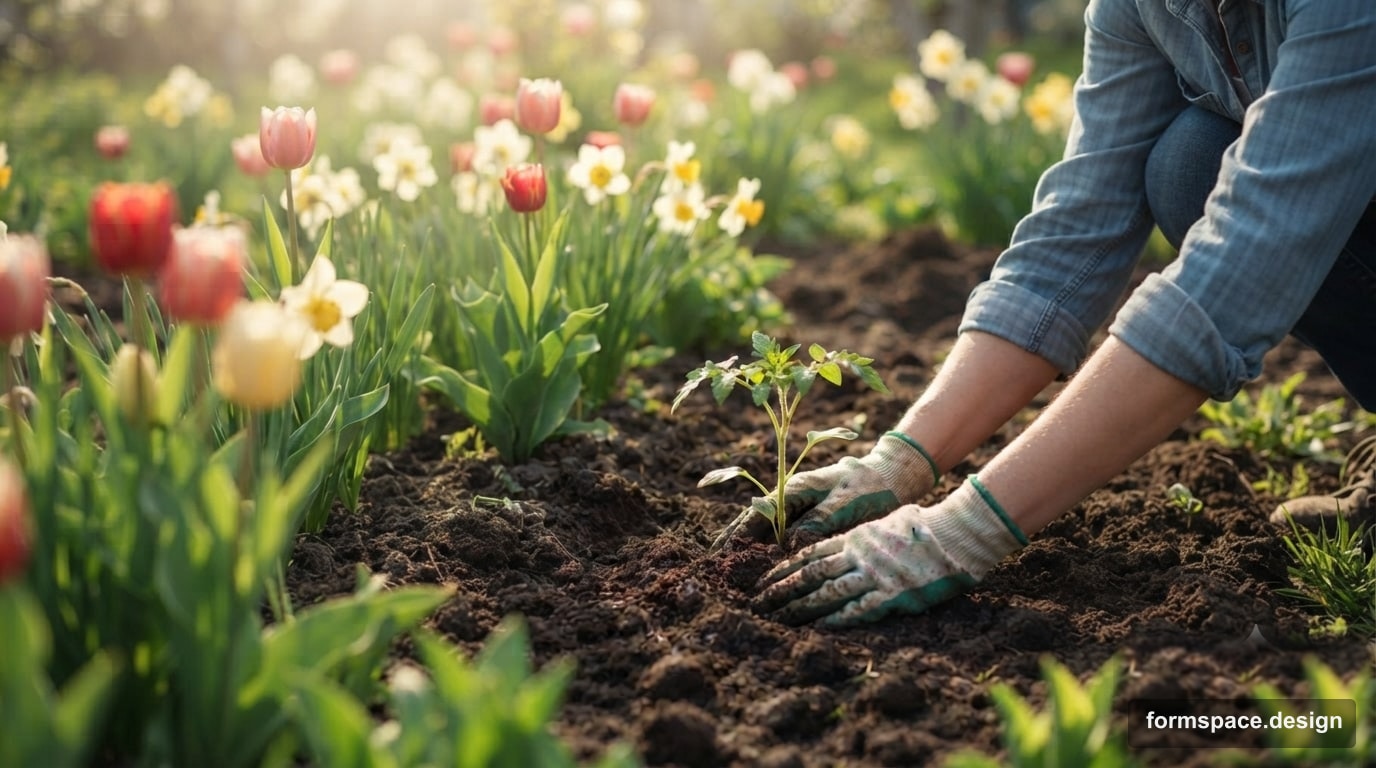
Spring vs. Autumn Planting: What to Plant When for Best Results
Choosing the optimal time for planting is crucial for plant survival and growth. Discover what's best to plant in spring and what thrives with autumn planting.
Choosing the right season for planting is one of the most important factors influencing a plant's survival and subsequent development in your garden. Spring and autumn each have their advantages and disadvantages, as well as an optimal set of plants that should be planted during these periods. Proper planning helps reduce stress on plants, provides them with the best conditions for rooting and active growth, and avoids common mistakes that lead to the loss of seedlings.
General Criteria for Choosing Planting Time
When deciding on the planting time, it's important to consider several key factors:
- Plant species: Some crops tolerate planting better in cold weather, while others prefer warmth.
- Climatic zone: In regions with harsh winters, autumn planting is riskier than in mild climates.
- Seedling condition: Plants with a closed root system (in a container) can be planted almost all season; those with an open root system only during dormant periods.
- Soil type: Heavy clay soils warm up slower in spring and freeze deeper in winter, which must be considered.
- Weather conditions: The absence of severe frosts, drought, or heavy rains immediately after planting is critical.
Advantages of Spring Planting and What to Plant
Spring planting provides plants with a long, warm period for rooting and development before the onset of winter cold. This is especially important for heat-loving crops and plants with delicate root systems.
Advantages:
- Warmth and light: Rising temperatures and increasing daylight hours stimulate active growth.
- Ample moisture: After snowmelt, the soil is usually well-hydrated, which aids rooting.
- Time for adaptation: Plants have the entire growing season to establish themselves and strengthen before winter.
What to plant in spring:
- Annual and perennial flowers: Seedlings, seeds, division of bushes.
- Vegetable crops: Most vegetables are planted as seedlings or seeds in spring after the threat of late frosts has passed (typically after mid-May for temperate zones).
- Shrubs and trees with open root systems: Fruit trees (apples, pears, plums) and ornamental trees (lilacs, spiraea). It's important to plant before buds open. When planting large trees with a soil ball in spring, ensure the root system is preserved as much as possible to minimize stress. The approximate depth of the planting hole for a fruit tree seedling should be about 60-80 cm, and twice the width of the root ball or root system.
- Coniferous plants: Spring is the optimal time for planting spruces, pines, thujas, and junipers, as they have time to root well before winter.
- Garden strawberries: Spring planting allows them to produce a harvest the following year.
Advantages of Autumn Planting and What to Plant
Autumn planting is often preferred for many plants, as it mimics natural conditions and allows the root system to develop in comfortable, moist soil before frosts, while the aerial part is dormant.
Advantages:
- Less stress: Plants are dormant, which reduces transplant shock.
- Optimal moisture: Autumn rains provide sufficient soil moisture, minimizing the need for frequent watering.
- Time for rooting: Roots continue to grow as long as the soil temperature is above +4°C, allowing them to strengthen before spring.
- Time-saving in spring: More time will be available for other garden tasks in spring.
What to plant in autumn:
- Bulbous flowers: Tulips, daffodils, hyacinths, crocuses. Plant them 4-6 weeks before the soil freezes so they can root but not sprout. The planting depth for a bulb is usually 2-3 times its height.
- Most fruit and ornamental trees and shrubs with open root systems: Especially those resistant to frost (currants, gooseberries, honeysuckle, sea buckthorn, many types of roses). Autumn plantings of such crops often show better survival rates. It's important to complete planting 3-4 weeks before stable frosts so the roots have time to adapt slightly.
- Perennial flowers: Peonies, phloxes, irises. Dividing and transplanting these plants is best done in autumn.
- Winter garlic and onion sets: Planted before winter for an early harvest the following spring.
Common Mistakes When Choosing Planting Time
Avoiding these mistakes will help preserve your plants and effort:
- Late autumn planting: If a plant is planted too late, its root system won't have time to establish before frosts, and the plant will die. This is especially true for regions with early and harsh winters.
- Early spring planting: Planting heat-loving plants before the threat of late frosts has passed can lead to their demise.
- Planting in hot weather: Transplanting plants during peak summer heat or drought causes severe stress and requires intensive watering, which is not always effective.
- Improper soil preparation: Ignoring soil composition and density. For example, on heavy clay soils, water will stagnate, while on sandy soils, it will drain too quickly, which is detrimental to most crops.
- Ignoring light requirements: Planting shade-tolerant plants in full sun or vice versa.
How to Plan Plantings in formspace.design
Planning plantings on your plot with formspace.design significantly simplifies the process, allowing you to visualize the arrangement of plants and their interaction with other landscape elements before you even pick up a shovel. You can start with the 1.1 Plot Plan or 1.2 Plot Zones module to define optimal areas for different types of plants, considering light, terrain, and proximity to structures. For example, you can designate separate zones for a fruit orchard, ornamental shrubs, and flower beds, and then use 1.3 Plot Objects to place schematic representations of future plantings to assess their scale and required space, such as for groups of conifers that can grow up to 3 meters wide over time.
Next, use the 2.1 AI Concept module to get ideas for the style and composition of plants that will harmonize with the overall design of your plot. You can upload photos of your plot to 3.1 Design from Photo and apply various planting concepts to see how spring and autumn compositions will look. This helps you evaluate how well your chosen plants will fit into the existing landscape and how they will look in different seasons, even before purchasing seedlings. This approach helps avoid costly mistakes related to plants not matching the conditions or aesthetics of the plot, ensuring your plantings will delight the eye for years to come. For a deeper understanding of the interrelationships of elements on your plot, explore ideas that transform space, such as in the article "10 Small Architectural Solutions That Transform Your Plot".
FAQ
Can trees be planted in summer?
Yes, trees with a closed root system (in containers) can be planted in summer. However, this requires more diligent care, especially regular and abundant watering, to compensate for heat stress and prevent the root ball from drying out. It is advisable to choose cloudy, cool days or evening hours for such planting and provide shade in the first few weeks after planting.
Which plants are most sensitive to planting times?
Seedlings with an open root system are most sensitive to planting times, especially fruit trees and roses. They must be planted during dormant periods – early spring before buds open or in autumn after leaves fall, but before the soil freezes. Heat-loving crops that cannot tolerate even light frosts, such as many types of vegetables and flowers, are also sensitive.
What if I bought a seedling but couldn't plant it on time?
If you bought a seedling with an open root system and the planting time has passed (e.g., frosts have set in), you can heel it in a trench at an angle and cover it with spruce branches or agrotextile. Containerized seedlings can be stored in a cool, frost-free room, watered regularly, until favorable planting conditions arrive. This approach helps preserve the plant until the next season, ensuring minimal stress.
Do I need to fertilize the soil during autumn planting?
For autumn planting, it is recommended to apply phosphorus-potassium fertilizers, which promote root system development and increase plant frost resistance. Nitrogen fertilizers should not be used in autumn, as they stimulate the growth of the aerial part, which can lead to the freezing of young shoots. The optimal amount of fertilizer depends on the initial soil composition and the needs of the specific plant.
Can mature trees be transplanted?
Transplanting mature trees is possible, but it is a complex and labor-intensive process best left to specialists. The older the tree, the harder it tolerates transplanting, and the greater the risk of its demise. The optimal time for transplanting large trees is early spring or late autumn when the tree is dormant. Success depends on preserving the largest possible root ball and proper care after transplanting. Sometimes it's better to consider creating new functional zones than risking an old tree, as described in the article "10 Ideas for Family Recreation on Your Plot Without a Pool".
How to prepare heavy clay soil for spring planting?
To improve heavy clay soil for spring planting, it is recommended to incorporate organic materials such as compost, humus, or peat, as well as sand. This will improve the soil structure, making it looser, more aerated, and more permeable to water. It is best to carry out these works in autumn so that organic matter has time to decompose and mix with the soil over winter.
Choosing the right time for planting is not only a guarantee of your garden's health and beauty but also a significant saving of time and resources. Consider the climate, plant requirements, and seedling condition to enjoy lush blooms and abundant harvests every year. Plan your plantings in advance, and your plot will delight you with its harmony and abundance.
Published:

Volodymyr Vybornyi
Landscape designer, founder of https://formspace.design/
Writes about landscape design, business, and modern computer-aided landscape planning tools, including AI.