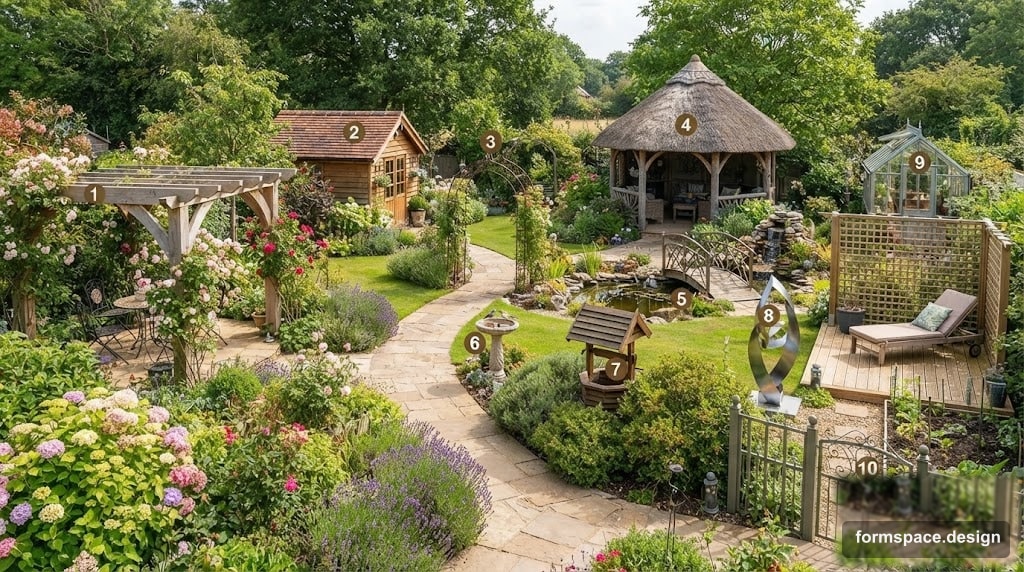
10 Small Architectural Solutions That Will Transform Your Plot
Discover how 10 small architectural solutions can transform your plot (6-20 ares), adding functionality, style, and comfort without major investments. Practical tips from formspace.design.
Transforming a garden plot without resorting to large-scale renovations is entirely realistic. Small architectural forms (SAFs) are the details that give a landscape individuality, functionality, and coziness. They allow you to zone space, create accents, and enhance the aesthetics of the area, whether it's a compact 6 ares or a spacious 20. The main thing is to choose solutions that harmoniously fit into the overall style and meet your needs.
Zoning and Coziness: Pergolas, Arches, and Patios
Small architectural forms are excellent for creating functional zones and cozy corners on your plot.
1. Pergolas and Arches
What they are: Lightweight structures, often entwined with plants, creating shade and visually dividing space. Pergolas can be freestanding or attached to the house, forming a transitional zone.
Why they work: A pergola on a 10-12 are plot can become an ideal spot for a summer dining area or lounge, providing shade from the sun. Arches, on the other hand, perfectly mark the entrance to different parts of the garden or serve as support for climbing roses, creating a romantic atmosphere. Installing a small pergola can take 1-2 days if you have a ready-made kit, but the effect will be immediate.
2. Small Patios and Terraces
What they are: Open paved areas designed for relaxation, barbecues, or outdoor dining. They can be raised above ground level or flush with it.
Why they work: A patio is an extension of the home outdoors. Even a compact 3x4 meter area, paved with cobblestones or decking, can become a focal point. It allows you to comfortably place garden furniture, a grill, and create a cozy space for gatherings with loved ones. For plots of 15 ares or more, you can consider several patios in different zones, for example, one for morning coffee and another for evening gatherings.
Pathways and Accents: Functionality with Finesse
Properly designed pathways and water features are not only functional but also serve as important aesthetic accents.
3. Original Garden Pathways
What they are: Paths connecting various areas of the plot, made from diverse materials — natural stone, gravel, wood, decorative tiles.
Why they work: Pathways define the route of movement across the plot and its structure. By replacing standard concrete slabs with a winding path made of wood slices or stepping stones embedded in gravel, you immediately add uniqueness to the landscape. A common mistake is pathways that are too wide or too narrow. For a main path on an 8-10 are plot, the optimal width is 80-100 cm; for secondary paths, it's 40-60 cm. Creating a paved pathway 10-15 meters long can take 3-5 days, including base preparation.
4. Decorative Ponds and Fountains
What they are: Small ponds, streams, cascades, or fountains that add dynamism and sound to the garden.
Why they work: The sound of flowing water is calming and creates a special atmosphere. Even a small fountain or a mini-pond with aquatic plants can become the central element of a composition. On a 6-8 are plot, a compact solution with a diameter of 1-1.5 meters is sufficient. It's important to consider the water circulation and drainage system to prevent stagnation and algae growth.
Vertical Dimension and Focal Points
Utilizing vertical space and creating eye-catching points is key to an interesting landscape.
5. Vertical Greening Elements
What they are: Living walls, trellises, pergolas covered with climbing plants, or multi-tiered flower beds.
Why they work: Vertical landscaping effectively uses space, especially on small plots. It conceals unsightly walls, creates green screens, zones the territory, and adds volume. For example, a house wall covered with Virginia creeper or clematis instantly transforms the exterior.
6. Outdoor Fire Pits and Hearths
What they are: Specially equipped places for making fire, intended for cooking or simply for creating a cozy atmosphere in the evening.
Why they work: A fire pit or outdoor fireplace becomes a natural gathering point for evening get-togethers. It adds warmth and light, creating unparalleled coziness. For safety, it is recommended to place the fire pit at least 3-5 meters away from buildings and flammable objects, and to pave the surrounding area with non-combustible materials. This is an ideal solution for a lounge area on a plot of 10 ares or more.
Decor and Practicality: Furniture, Sculptures, and Lighting
Every detail should be not only beautiful but also functional.
7. Stylish Benches and Garden Furniture
What they are: Functional items designed for relaxation, made of wood, metal, rattan, or stone.
Why they work: A comfortable bench in a shady corner or a furniture set on a patio invites you to relax and enjoy the garden. Choose furniture that harmonizes with the overall style of the plot and is resistant to weather conditions. Place several benches in different areas of a 12-15 are plot to create diverse viewpoints and resting spots.
8. Small Sculptures and Art Objects
What they are: Decorative elements made from various materials — ceramics, metal, stone, wood.
Why they work: Sculptures and art objects add individuality and serve as focal points in the landscape. These can be abstract figures, garden gnomes (if they fit the concept), or, for example, an old mill. It's important not to overcrowd the space: for a 6-8 are plot, 1-2 such elements are sufficient; for more spacious properties of 15-20 ares, you can use up to 3-5, placing them in different zones.
9. Decorative Lighting
What they are: Lanterns, pathway lighting, accent lighting for plants and architectural elements.
Why they work: Lighting transforms the plot at night, making it safe and magical. Uplighting trees, string lights on pergolas, or built-in lights along pathways create a cozy and mysterious atmosphere. When planning lighting, consider both functionality (lighting entrances, pathways) and aesthetics (highlighting the beauty of plants and objects). You can use formspace.design to visualize how different light sources will look on your plot.
10. Raised Flower Beds and Garden Beds
What they are: Flower beds or garden beds enclosed by borders of wood, stone, brick, or metal, raised above ground level.
Why they work: Raised beds give the landscape clarity and neatness, simplify plant care, and allow you to create optimal growing conditions using quality soil. They are especially convenient for people with limited mobility or the elderly, as they do not require excessive bending. On a 6-10 are plot, such beds can zone the space or become a bright accent.
How to Choose the Right Solutions for Your Plot
When choosing small architectural forms, it's important to consider several factors:
- Plot Size: Don't overload a small area with overly large or numerous elements. On 6 ares, it's better to focus on 2-3 key SAFs rather than ten.
- Overall Style: Ensure that the chosen elements harmonize with the house's architecture and the existing landscape.
- Functionality: Consider how each element will be used and what benefit it will bring.
- Budget: Many small forms can be made yourself or purchased as ready-made solutions at an affordable price.
Start with planning. Imagine how you want to use your plot, what zones you need. Landscape planning tools, such as formspace.design, can help you visualize different SAF placements and assess their harmony before implementation.
FAQ
What materials are best for SAFs?
The choice of material depends on the plot's style and climatic conditions. For a classical garden, stone and wrought iron are suitable; for a modern one — concrete, glass, composite materials; for a natural one — wood, natural stone, gravel. It is important that the materials are durable and resistant to weather conditions.
Can several SAFs be combined on a small plot?
Yes, but with caution. On a 6-8 are plot, it's better to choose 2-3 harmoniously combined elements to avoid overcrowding the space. For example, a small patio with a pergola and a winding pathway would look appropriate.
How do you care for small architectural forms?
Care depends on the material. Wooden elements require regular treatment with antiseptics and varnish/paint. Metal ones need protection against corrosion. Stone and concrete require periodic cleaning. Climbing plants on pergolas and arches need pruning and tying.
How expensive is it to create SAFs?
The cost varies greatly. Simple solutions, such as a small wooden arch or a raised wooden flower bed, can be very budget-friendly. More complex projects, such as a natural stone patio or a fountain with lighting, will require greater investment. Many elements can be made yourself, which significantly reduces costs.
Do SAFs affect the value of a plot?
Yes, well-executed small architectural forms that are harmoniously integrated into the landscape significantly enhance the aesthetic appeal and functionality of the plot, which can positively impact its market value.
Conclusion
Small architectural forms are a powerful tool for transforming any plot. They allow you to add individuality, functionality, and beauty without the need for major construction. Start small, choose a few elements that best meet your needs and style, and gradually create the garden of your dreams. Remember that even small changes can have a big impact and make your plot truly unique.
Published:

Volodymyr Vybornyi
Landscape designer, founder of https://formspace.design/
Writes about landscape design, business, and modern computer-aided landscape planning tools, including AI.