Why I Chose Organic Content Over Advertising — Calculation and Logic
Vladimir Vyborny, founder of formspace.design, explains why he bet on organic content instead of paid advertising. His reasoning and strategy.
In the world of modern business, especially in the SaaS sector where competition for potential clients' attention is high, choosing a marketing strategy is critical. Many immediately jump into paid advertising, expecting instant results. I, Vladimir Vyborny, founder of formspace.design, took a different path. My decision in favor of organic content was not spontaneous — it is based on years of business experience and careful calculation.
My Journey: From "Dom i Sad" to formspace.design
My business story began back in the 90s when I managed the company "Alkar," and then founded and led the landscape company "Dom i Sad" for over two decades. Over these years, I transitioned from manual management to attempts at automation, setting tasks for programmers regarding management accounting. I know perfectly well what client acquisition is, how word-of-mouth works, and how important long-term relationships are. It was the pain from the lack of suitable tools for the landscape business that led me to create formspace.design. When I started coding with AI at 61, it was not only a technical challenge but also a rethinking of many business processes, including marketing.
I saw how my colleagues and partners spent colossal budgets on contextual advertising, SMM promotion, and other types of paid traffic. Sometimes it brought quick sales, but more often than not, it only resulted in a pile of "cold" leads and a high acquisition cost. For a niche B2B product like formspace.design, where the purchasing decision is not made in a single day, the effectiveness of direct advertising always raised questions for me.
Calculation: Why Paid Advertising Isn't Always Optimal
Let's consider some simple math. The average cost per click in paid advertising for the B2B segment can be several times higher than for the mass market. For example, in landscape design or related niches, the cost of acquiring a potential client who eventually converts into a buyer can easily reach several hundred dollars. At the same time, the customer's lifetime value (LTV) and average check must be high enough to cover these costs. For a new product that is still gaining trust, this is a very risky investment.
My experience has shown that the average payback period for advertising in my niche could reach 6-12 months, and sometimes even longer. If you launch an advertising campaign and it doesn't pay off in the first 2-3 months, that's already a warning sign. Moreover, as soon as you stop the advertising campaign, the flow of leads dries up. This is a constant race that requires continuous investment and optimization. For a founder who develops the product himself and doesn't have a team of marketers, this is an unbearable burden.
I also considered that for SaaS products, it's important not just to attract a client, but to retain them. Paid advertising often brings in those who are looking for a quick fix and may be less loyal. Organic traffic, on the other hand, attracts people who are already interested in a deep dive into the topic; they seek expertise and are willing to delve into details. Such users are more likely to become long-term clients of formspace.design.
Logic: Building Trust and Expertise Through Content
My logic is simple: in the modern world, people look for answers to their questions online. They trust experts who share knowledge, not just sell. By creating high-quality, useful content, I can demonstrate my expertise and experience, accumulated over decades in landscape design and business.
Organic content isn't just blog articles. It includes video tutorials, case studies, reviews, and answers to frequently asked questions. Each such piece of material works for me 24/7, attracting an interested audience. It's like planting a tree: it doesn't bear fruit immediately, but after a few years, it yields a harvest without requiring constant investment in watering and fertilization. My blog started bringing significant traffic within 4-6 months of an active start, and this traffic continues to grow.
I believe this approach is more honest and transparent. I don't try to "buy" attention; I earn it. This is especially important for a product designed to simplify the complex process of landscape design. The more I share my experience, the more trust I build in myself and in formspace.design. This is the foundation upon which a sustainable business is built.
Long-Term Strategy: The Accumulation Effect
Organic content has an accumulation effect. Each new piece of material not only attracts fresh traffic but also strengthens the positions of already published ones. Search engines see that the site is regularly updated with quality content, which increases its authority. Over time, this leads to me receiving a stable flow of targeted visitors without constant financial injections.
Moreover, quality content is an asset that works for me for years. An article written today can bring traffic and leads a year, two, or even five years from now. Whereas the effect of paid advertising ends the moment you stop paying. This doesn't mean that paid advertising is bad, but for me, as a founder who develops the product independently, the organic approach proved to be more rational and strategically sound.
I also noticed that users who come through organic search are more likely to finish reading articles, delve deeper into the product and are more inclined to register. This indicates that they are already at a certain level of awareness and are actively looking for a solution to their problem. As I wrote in the article about client reactions to AI visualization, engagement and understanding of the product's value play a key role.
How to Plan a Content Strategy with formspace.design
While formspace.design is not directly a content creation tool, it can be a powerful aid for a landscape designer or any plot owner who wants to create their content strategy. How? It's very simple: formspace.design helps you better understand the needs and problems of your target audience, and also better visualize solutions that can be described in content.
Imagine you are a landscape designer. Using module 1.x "Planning and Zoning" in formspace.design, you can analyze the difficulties plot owners face when distributing zones, placing objects, or creating functional connections. For example, if you see that many beginners make mistakes with path widths (a typical error is too narrow passages of 80-90 cm, instead of a comfortable 120-150 cm) or incorrectly orient a recreation area relative to the sun, these are excellent topics for articles or videos. Module 2.1 "AI Concept" allows you to quickly generate ideas and visualizations that can then be used as illustrations or a basis for educational materials. And module 3.1 "Design by Photo" will help you show "before" and "after," which is very valuable for demonstrating solutions in content. You can describe a specific scenario: "How I helped a client solve the problem of a shaded area using AI visualization in formspace.design."
These are not just abstract musings. This is my approach to how I myself use the product I create to better understand the market and generate ideas for the blog. After all, as I understood by observing programmers, product development is a constant interaction with real problems, not just writing code.
FAQ
Does this mean paid advertising is useless?
Not at all. Paid advertising can be very effective for rapid scaling or when launching new offers, when you need to quickly test hypotheses. But its application must be conscious, with a clear understanding of ROI and a readiness for continuous investment and optimization. For many projects, it simply isn't the first and only choice.
How long does it take to see results from organic content?
Organic content is a marathon, not a sprint. The first tangible results, such as a stable increase in traffic and the appearance of leads, are usually noticeable after 4-6 months of regular work. Full returns can take a year or more, but these results will be sustainable and continue to work for you for a long time.
What if clients are needed "here and now"?
In such a situation, a combined approach can be considered: small, precisely targeted advertising campaigns to quickly attract initial clients, alongside intensive creation of organic content. This will allow you to meet short-term needs and lay the foundation for long-term growth.
How to measure the success of an organic content strategy?
Success is measured not only by the number of views. It's important to track behavioral metrics (time on page, depth of view), the number of leads (newsletter subscriptions, product registrations), and, of course, the conversion of these leads into clients. I also look at search engine rankings for key queries and the growth of link mass.
What type of content is most effective for B2B?
For the B2B segment, educational materials, case studies, expert articles, webinars, and detailed guides are most effective. Content should solve specific problems of your audience, demonstrate your expertise, and show how your product or service helps achieve specific business goals. For formspace.design, these could be articles on zoning, plant selection, or automating the work of a landscape designer.
Can AI help in creating organic content?
Absolutely! AI is a powerful tool to assist in content creation. It can help in generating ideas, structuring articles, writing drafts, and optimizing for SEO. But the keyword here is "assist." AI will not replace your unique expertise, voice, and personal experience, which are what make content truly valuable and trustworthy.
Next Step: Building Your Asset
My choice in favor of organic content is an investment in long-term development and building a sustainable business. It's a path that requires patience and consistency, but ultimately brings much higher quality and more loyal clients. If you are involved in landscape design or developing a similar niche project, consider this: perhaps your most valuable asset is not your advertising budget, but your expertise and willingness to share it. Start creating your content asset today, and formspace.design will help you better understand what your audience truly needs.
Published:
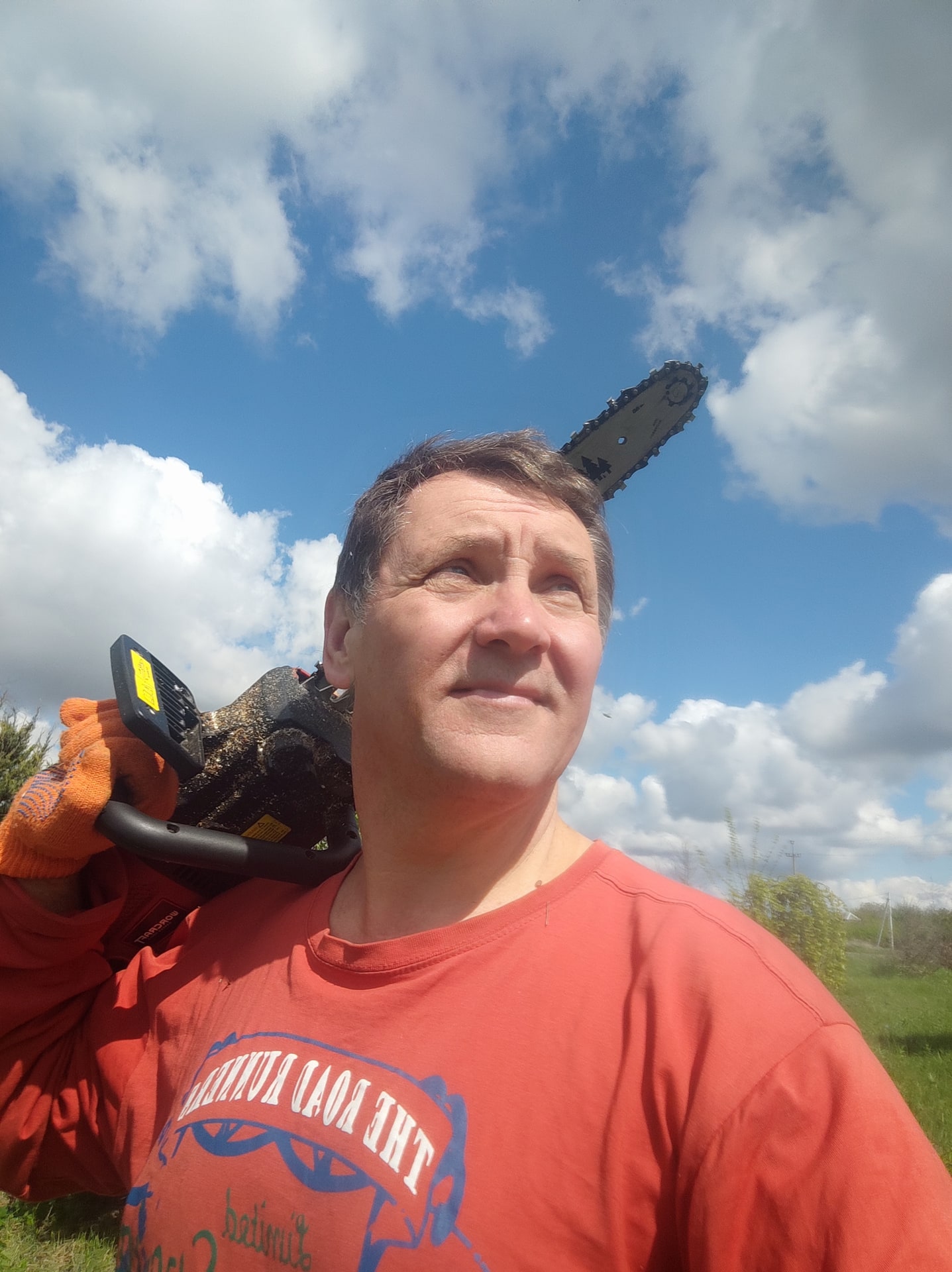
Volodymyr Vybornyi
Landscape designer, founder of https://formspace.design/
Writes about landscape design, business, and modern computer-aided landscape planning tools, including AI.