Warum eine Feuerstelle im Garten mehr als nur schön ist
Entdecken Sie die verborgenen Vorteile einer Feuerstelle in Ihrem Garten: von der Entsorgung von Ästen bis zu gemütlichen Abenden. Planen Sie sicher mit formspace.design.
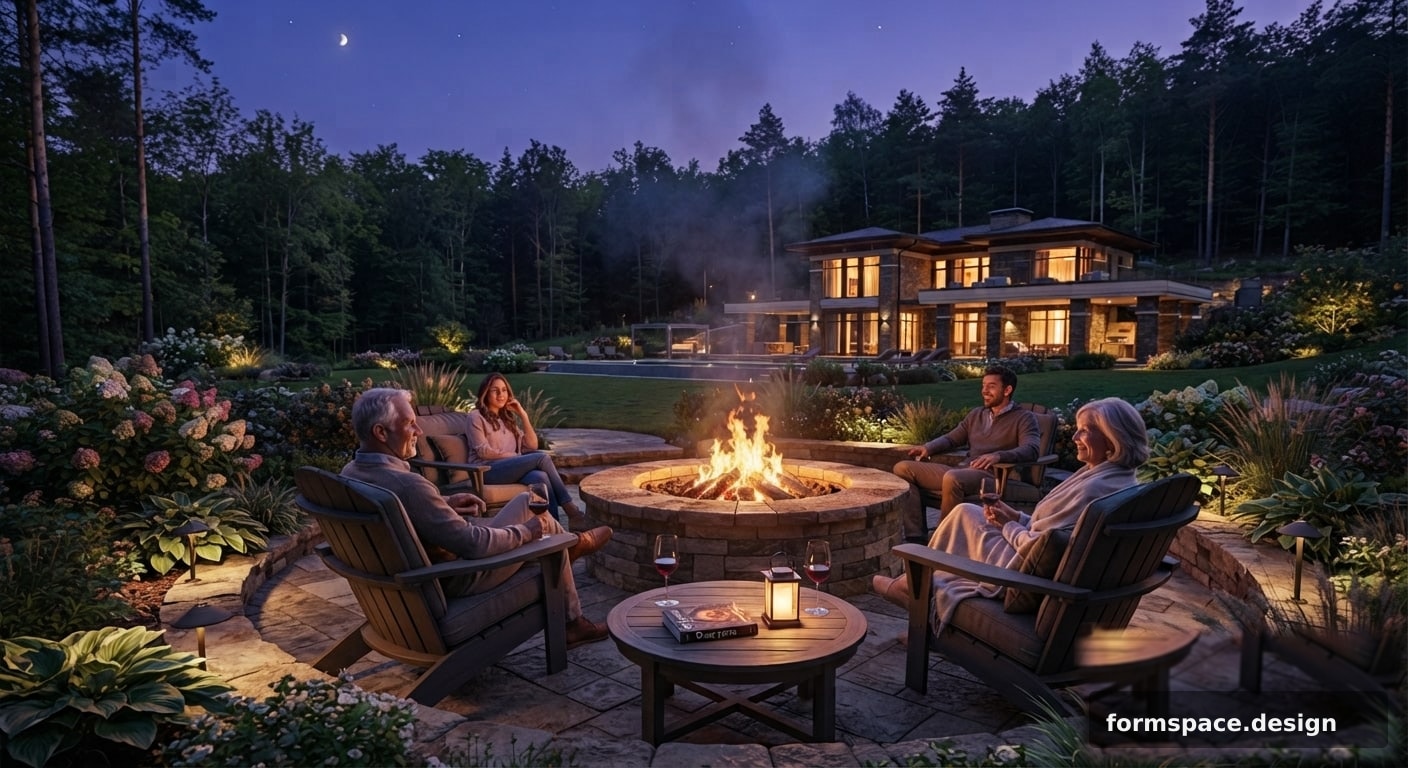
Eine Feuerstelle im Garten ist weit mehr als nur ein Element der Landschaftsgestaltung oder ein Ort zum Kochen. Sie ist eine funktionale Feuerstelle, die zum Mittelpunkt für Familie und Freunde werden kann, eine Möglichkeit zur Entsorgung von Pflanzenabfällen und eine Quelle für Wärme und Licht an kühlen Abenden. Eine richtig geplante und angelegte Feuerstelle erhöht den Komfort und die Ästhetik Ihres Gartens erheblich.
Funktionale Vorteile einer Feuerstelle
Eine Feuerstelle im Garten bietet zahlreiche praktische Anwendungen, die über die Ästhetik hinausgehen. Erstens dient sie als hervorragendes Werkzeug zur Entsorgung von Gartenabfällen wie trockenen Ästen, Blättern oder gemähtem Gras, die sonst entsorgt oder kompostiert werden müssten. Dies spart Zeit und Ressourcen, indem unnötiger Müll in nützliche Asche zur Düngung umgewandelt wird. Zweitens ist eine Feuerstelle eine natürliche Wärme- und Lichtquelle, die es ermöglicht, die Zeit im Freien an kühlen Abenden oder in der Übergangszeit zu verlängern und eine gemütliche und entspannende Atmosphäre zu schaffen.
Darüber hinaus wird der Bereich um die Feuerstelle zu einem idealen Ort für kulinarische Experimente. Neben traditionellem Grillen können Marshmallows geröstet, Kartoffeln in der Asche gebacken oder Gerichte in einem Topf über offenem Feuer zubereitet werden. Dies trägt dazu bei, unvergessliche Momente zu schaffen und die Bindung zu geliebten Menschen zu stärken. Schließlich wird die Feuerstelle auf natürliche Weise zu einem Zentrum der sozialen Interaktion, das Menschen zu Gesprächen, Geschichten und einfach zum Genießen der Flammen anzieht, was sie zu einem unverzichtbaren Element für jeden gastfreundlichen Garten macht.
Standortwahl für die Feuerstelle: Sicherheit geht vor
Bei der Planung einer Feuerstelle muss die Sicherheit oberste Priorität haben. Die Wahl des richtigen Standorts ist entscheidend. Es wird empfohlen, die Feuerstelle mindestens 3-5 Meter von Gebäuden (Haus, Schuppen, Garage), Zäunen und leicht entflammbaren Objekten entfernt zu platzieren. Von Bäumen und hohen Sträuchern muss ein Abstand von mindestens 2-3 Metern eingehalten werden, um das Risiko eines Brandes der Baumkronen durch Funkenflug auszuschließen. Berücksichtigen Sie immer die vorherrschende Windrichtung in Ihrer Region, damit Rauch und Funken nicht in Wohngebiete oder zu Nachbarn geweht werden.
Die Oberfläche um die Feuerstelle sollte nicht brennbar und eben sein. Materialien wie Beton, Pflastersteine, Kies oder Stein sind ideal. Unter der Feuerstelle selbst muss ein feuerfester Untergrund verlegt werden. Vermeiden Sie es, die Feuerstelle unter überhängenden Ästen von Bäumen oder in der Nähe von trockenem Gras und Laub zu platzieren. Eine sorgfältige Planung verhindert potenzielle Brände und gewährleistet eine sichere Nutzung der Feuerstelle über viele Jahre hinweg.
Arten von Feuerstellen und Materialien
Feuerstellen gibt es in verschiedenen Ausführungen, jede mit ihren eigenen Merkmalen und Vorteilen. Feste Feuerstellen werden in der Regel in die Landschaft integriert und aus robusten, feuerfesten Materialien wie Ziegel, Naturstein oder Beton gefertigt. Sie vermitteln ein Gefühl von Beständigkeit und Langlebigkeit und werden zu einem festen Bestandteil des Gartendesigns. Die Tiefe einer festen Schale beträgt normalerweise 30-50 cm, was ausreichend Platz für Brennholz und ein sicheres Abbrennen gewährleistet.
Tragbare Feuerstellen sind eine flexiblere Option. Dabei handelt es sich um Metallschalen, Feuerschalen oder tragbare Feuerstellen, die im Garten bewegt oder zur Aufbewahrung weggeräumt werden können. Dies ist praktisch für kleine Gärten oder wenn die Konfiguration des Ruhebereichs häufig geändert werden muss. Eingelassene Feuerstellen, die in den Boden eingelassen sind, bieten maximale Sicherheit und minimale Sichtbarkeit, indem sie sich in die umgebende Landschaft einfügen. Für die Verkleidung und Gestaltung des Bereichs um die Feuerstelle werden häufig Naturstein, feuerfeste Ziegel, Pflastersteine oder spezielle Betonblöcke verwendet, wodurch sich die Feuerstelle harmonisch in den Gesamtstil des Gartens einfügt. Mehr über die Materialauswahl erfahren Sie in unserem Artikel: Wie man Materialien für Wege und Flächen im Garten auswählt.
Schritte zum Bau einer festen Feuerstelle in Eigenregie
Der Bau einer festen Feuerstelle ist für viele Grundstückseigentümer eine machbare Aufgabe. Der erste Schritt ist das Abstecken und Vorbereiten des Fundaments. Bestimmen Sie den genauen Standort und Durchmesser der zukünftigen Feuerstelle. Graben Sie eine Grube von etwa 30-40 cm Tiefe, die den Durchmesser der Schale um 10-15 cm am Umfang übersteigt. Den Boden der Grube sorgfältig verdichten.
Als Nächstes folgt das Anlegen einer Drainageschicht. Schütten Sie eine 10-15 cm dicke Schicht Schotter oder Kies auf und verdichten Sie diese erneut. Dies gewährleistet den Wasserablauf und verhindert Staunässe unter der Feuerstelle. Über der Drainage kann eine Sandschicht verlegt werden. Danach beginnen Sie mit dem Errichten der Wände. Verwenden Sie feuerfeste Ziegel, Naturstein oder Betonblöcke und befestigen Sie diese mit speziellem hitzebeständigem Mörtel. Die Innenseite der Schale kann zusätzlich mit einem Metallblech oder feuerfesten Platten ausgekleidet werden, um die Lebensdauer zu erhöhen.
Der letzte Schritt ist die Gestaltung des Bereichs um die Feuerstelle. Verlegen Sie einen nicht brennbaren Belag (Fliesen, Pflastersteine, grober Kies) in einem Abstand von mindestens 1-2 Metern zum Rand der Schale. Stellen Sie bequeme Sitzgelegenheiten auf – Bänke, Sessel oder eingebaute Ränder. Denken Sie an Beleuchtung und Bepflanzung des Bereichs, um einen gemütlichen und funktionalen Erholungsraum zu schaffen.
Fehler beim Anlegen einer Feuerstelle und wie man sie vermeidet
Häufig treten dieselben Fehler beim Anlegen einer Feuerstelle auf, die zu Unannehmlichkeiten oder sogar Gefahren führen können. Einer der häufigsten Fehler ist die falsche Standortwahl, zu nah am Haus, an Holzkonstruktionen oder trockenen Bäumen. Halten Sie immer die empfohlenen Sicherheitsabstände ein, mindestens 3-5 Meter von Gebäuden und 2-3 Meter von Vegetation.
Das Fehlen einer Drainage im Fundament der Feuerstelle führt zu Wasseransammlungen, was das Anzünden erschwert und die Zerstörung der Konstruktion beschleunigt. Verlegen Sie immer eine Schicht Schotter oder Kies. Die Verwendung von brennbaren Materialien für die Verkleidung oder Pflasterung um die Feuerstelle ist ebenfalls ein schwerwiegender Fehler, der das Brandrisiko erhöht. Wählen Sie ausschließlich feuerfeste Materialien. Ein unüberlegter Ruhebereich ohne bequeme Sitzgelegenheiten oder mit ungeeignetem Belag macht die Nutzung der Feuerstelle unbequem. Planen Sie diesen Bereich umfassend.
Ein typischer Fehler, den Anfänger oft machen, ist die Verwendung von Kies ohne Geotextil darunter. Dies führt zu einem schnellen Bewuchs des Bereichs mit Unkraut, das schwer aus der Kiesschicht zu entfernen ist. Verlegen Sie immer Geotextil, bevor Sie Kies aufschütten. Und natürlich ist die Missachtung der Brandschutzvorschriften während des Betriebs der gefährlichste Fehler, der ständige Aufmerksamkeit und das Vorhandensein von Löschmitteln erfordert.
Pflege und Sicherheit im Betrieb
Regelmäßige Pflege der Feuerstelle und strikte Einhaltung der Sicherheitsvorschriften gewährleisten deren Langlebigkeit und verhindern Unfälle. Reinigen Sie die Schale nach jedem Gebrauch unbedingt von Asche und unverbrannten Resten. Dies verbessert den Zug und verhindert die Bildung unangenehmer Gerüche. Die Asche kann als Dünger für den Garten verwendet werden, stellen Sie jedoch vorher sicher, dass sie vollständig abgekühlt ist.
Halten Sie das Feuer immer unter Kontrolle. Lassen Sie eine brennende Feuerstelle niemals unbeaufsichtigt, insbesondere wenn Kinder oder Haustiere in der Nähe sind. Bevor Sie das Grundstück verlassen oder schlafen gehen, stellen Sie sicher, dass das Feuer vollständig gelöscht ist. Halten Sie immer Löschmittel bereit: einen Eimer Wasser, Sand oder einen Feuerlöscher. Entzünden Sie keine Feuer bei windigem Wetter, da Funken weite Strecken fliegen können.
Verwenden Sie nur geeignetes Brennmaterial: trockenes Holz ohne chemische Beschichtungen. Verbrennen Sie keinen Kunststoff, Gummi oder anderen Hausmüll, da dies giftige Substanzen freisetzt. Mehr über die Gestaltung eines Gartens von Grund auf erfahren Sie hier: Gartengestaltung von Grund auf: Schritt-für-Schritt-Plan.
Wie man eine Feuerstelle mit formspace.design plant
Die Planung einer Feuerstelle mit formspace.design hilft Ihnen, diese zu visualisieren und sicher in die Landschaft Ihres Grundstücks zu integrieren. Beginnen Sie im Modul 1.1 „Grundstücksplan“, wo Sie einen bestehenden Plan hochladen oder von Grund auf neu erstellen können. Markieren Sie alle wichtigen Objekte: Haus, Garage, große Bäume, Sträucher und Zäune. Dies ist Ihre Grundlage für die weitere Platzierung der Feuerstelle unter Berücksichtigung aller Sicherheitsabstände.
Wechseln Sie dann zum Modul 1.2 „Zonen“ und markieren Sie den ungefähren Standort für die Feuerstelle. Zeichnen Sie zum Beispiel eine runde Zone „Feuerstelle“. Anschließend können Sie mit den Messwerkzeugen von formspace.design die Abstände dieser Zone zu allen kritischen Objekten genau bestimmen. Verschieben Sie die Zone, bis das System anzeigt, dass sie sich in einem sicheren Abstand befindet, z. B. mindestens 5 Meter vom Haus und 3 Meter vom nächsten Baum entfernt. Danach können Sie im Modul 2.1 „KI-Konzept“ verschiedene Gestaltungsideen für diesen Bereich erhalten, wobei die KI Vorschläge für die Anordnung von Sitzgelegenheiten, Pflasterung und dekorativen Elementen macht, die sich harmonisch in Ihr Grundstück einfügen. Und wenn Sie Fotos Ihres Grundstücks haben, können Sie mit dem Modul 3.1 „Design nach Foto“ visualisieren, wie die Feuerstelle am gewählten Ort aussehen wird, was Ihnen bei der endgültigen Entscheidung hilft.
Häufige Fragen
Kann man eine Feuerstelle auf einem kleinen Grundstück anlegen?
Ja, das ist möglich, aber man muss besonders auf die Einhaltung der Sicherheitsabstände achten. Auf kleinen Grundstücken werden oft tragbare Metallschalen oder kompakte, eingelassene Feuerstellen bevorzugt. Es ist wichtig sicherzustellen, dass von der Feuerstelle zu allen Gebäuden und leicht entflammbaren Materialien ein Abstand von mindestens 3-5 Metern eingehalten wird.
Welche Genehmigungen sind für den Bau einer Feuerstelle erforderlich?
In den meisten Fällen sind für den Bau einer privaten Feuerstelle auf dem eigenen Grundstück keine speziellen Genehmigungen erforderlich. Es müssen jedoch die örtlichen Brandschutzvorschriften strikt eingehalten werden, die Anforderungen an Abstände zu Gebäuden, Flammenhöhe und das Vorhandensein von Löschmitteln umfassen können. Es wird empfohlen, sich mit den Vorschriften Ihrer Gemeinde vertraut zu machen.
Womit darf man in der Feuerstelle heizen?
Für die Feuerstelle eignen sich ideal trockene Harthölzer (Birke, Eiche, Ahorn). Kaminbriketts können ebenfalls verwendet werden. Es ist strengstens verboten, Müll, Plastik, Gummi, chemisch behandelte Materialien oder feuchte Äste zu verbrennen, da dies zu starker Rauchentwicklung, Freisetzung giftiger Substanzen und großer Rußbildung führt.
Wie schützt man die Feuerstelle vor Regen und Schnee?
Feste Feuerstellen können mit speziellen Metallabdeckungen oder Planen geschützt werden, die oben angebracht werden. Tragbare Schalen können einfach an einem trockenen Ort aufbewahrt oder mit Schutzhüllen abgedeckt werden. Dies verlängert nicht nur die Lebensdauer der Feuerstelle, sondern erleichtert auch das Anzünden, da das Holz nicht feucht wird.
Darf man eine tragbare Feuerstelle auf einem Holzdeck verwenden?
Die Verwendung einer tragbaren Feuerstelle direkt auf einem Holzdeck ist äußerst unerwünscht und gefährlich aufgrund des hohen Brandrisikos. Selbst mit einem Funkenschutz können herabfallende Glut oder eine starke Erhitzung des Schalenbodens einen Brand verursachen. Wenn Sie sie dennoch auf einem Deck verwenden möchten, legen Sie unbedingt eine dicke Schicht nicht brennbaren Materials darunter, z. B. eine spezielle feuerfeste Matte oder mehrere Schichten Zementplatten, und halten Sie Löschmittel bereit.
Wie oft sollte man die Feuerstelle reinigen?
Es wird empfohlen, die Feuerstelle nach jedem Gebrauch zu reinigen, sobald die Asche vollständig abgekühlt ist. Dies verhindert die Ansammlung von Asche, verbessert den Zug und sorgt für ein effizienteres Abbrennen beim nächsten Mal. Regelmäßige Reinigung trägt auch dazu bei, das ästhetische Erscheinungsbild der Feuerstelle zu erhalten und unangenehme Gerüche zu vermeiden.
Welche Pflanzen eignen sich für den Bereich um die Feuerstelle?
Für den Bereich um die Feuerstelle sollten Sie niedrige, trockenheitstolerante und nicht brennbare Pflanzen wählen, die die Sicht nicht behindern und keine Brandgefahr darstellen. Bodendecker, niedrig wachsende Ziergräser, einige Sukkulentenarten oder Steinbrech eignen sich gut. Es ist wichtig, Pflanzen mit hohem Harzgehalt oder trockene Sträucher zu vermeiden, die leicht entzündlich sind.
Eine Feuerstelle im Garten ist eine Investition in Komfort, Gemütlichkeit und Funktionalität Ihres Außenbereichs. Sie schafft nicht nur eine einzigartige Atmosphäre, sondern bietet auch praktische Lösungen für alltägliche Aufgaben. Ein durchdachter Planungsansatz und die Einhaltung der Sicherheitsvorschriften ermöglichen es Ihnen, die Wärme und das Licht des lebendigen Feuers über viele Jahre hinweg zu genießen.
Veröffentlicht:

Volodymyr Vybornyi
Landschaftsdesigner, Gründer von https://formspace.design/
Schreibt über Landschaftsdesign, Business und moderne computergestützte Planungswerkzeuge für Landschaften – einschließlich KI.