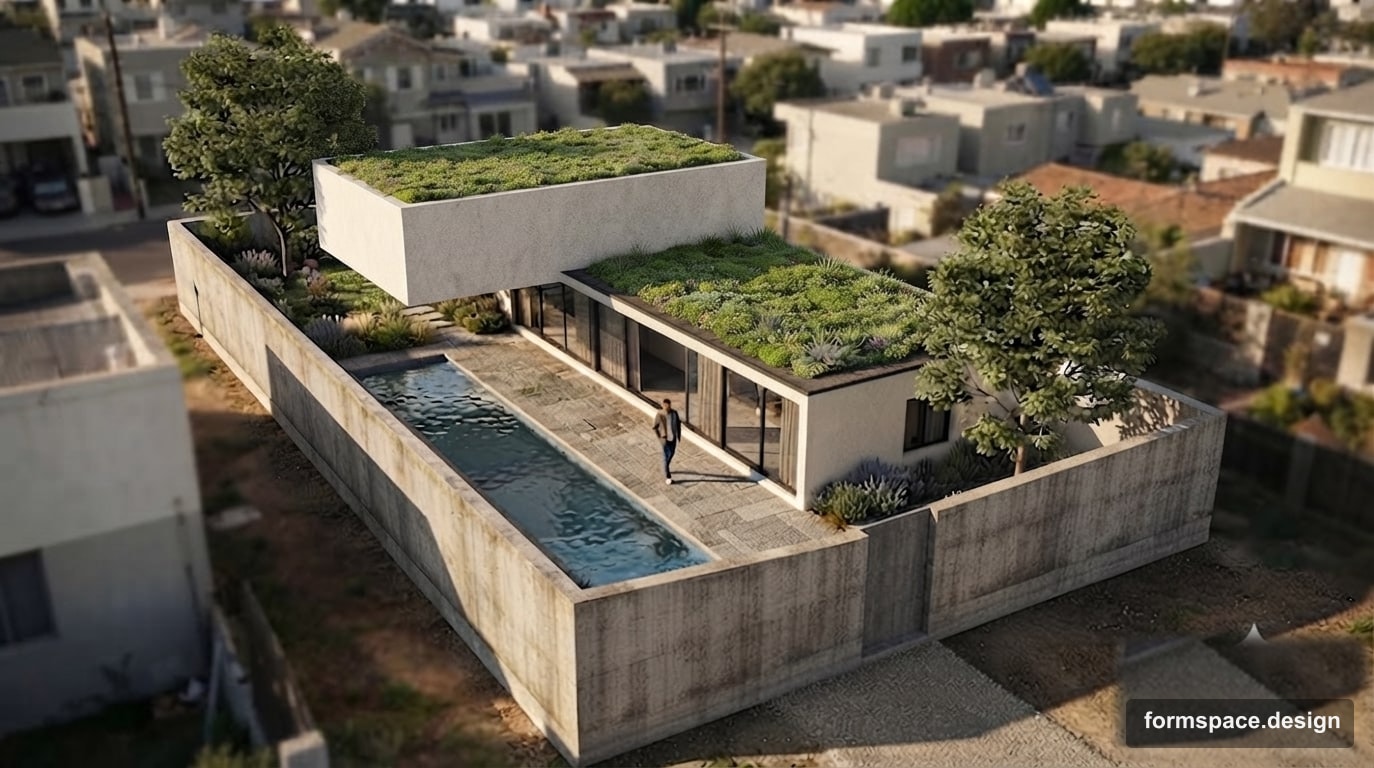
Планування вузької ділянки: 5 робочих рішень
Ефективні рішення для планування вузької ділянки, що допоможуть візуально розширити простір та функціонально зонувати територію, перетворивши недоліки на переваги.
Коротка відповідь: Вузька ділянка стає зручнішою, якщо не ділити її довгими паралельними смугами, а чергувати поперечні зони й точки зупинки. Зберігайте основний прохід 80–100 см і використовуйте посадки глибиною 0,5–1 м для приватності без ефекту коридору.
Основні проблеми вузької ділянки та їхні рішення
Головна проблема вузької ділянки — це її візуальна витягнутість, яка може створювати ефект «коридору» або «тунелю». Це ускладнює зонування і часто призводить до відчуття обмеженості. Однак ці недоліки можна обернути на переваги, використовуючи такі підходи:
- Візуальне розширення: Створюйте ілюзію ширини за допомогою горизонтальних ліній, поперечних елементів, контрастних колірних плям та дзеркал.
- Розбивка на зони: Замість однієї довгої перспективи розділіть ділянку на кілька функціональних зон, кожна зі своєю атмосферою та призначенням. Це «зламає» монотонність і створить відчуття глибини та різноманітності.
- Використання вертикалі: Активно застосовуйте перголи, арки, високі рослини, шпалери. Вони відволікають увагу від довжини та додають об'єму. Наприклад, ширма з виткими рослинами висотою 2-2,5 метра може стати чудовим роздільником зон і одночасно акцентом.
- Зміщення осі: Замість прямолінійних доріжок та симетричних композицій використовуйте вигнуті лінії, діагональні елементи та асиметрію. Це змушує погляд блукати ділянкою, створюючи відчуття більшої площі.
Візуальні прийоми розширення простору
Щоб вузька ділянка не виглядала як тунель, застосовуйте оптичні ілюзії:
- Поперечні елементи. Висаджуйте чагарники або влаштовуйте доріжки впоперек ділянки, щоб створити горизонтальні акценти. Ширина доріжки має бути комфортною, не менше 80 см для однієї людини, а для двох – 120 см. Якщо доріжка ширша біля входу і звужується до дальньої частини, це створить ілюзію перспективи та глибини.
- Контрастні кольори. Використовуйте світлі та холодні відтінки на далеких межах ділянки, щоб вони здавалися далі. Теплі та яскраві кольори, навпаки, наближають об'єкти. Наприклад, яскраво-червоні квіти в найближчій до будинку зоні та ніжно-блакитні на тлі далекого паркану.
- Дзеркала та відбиваючі поверхні. Стратегічно розташовані дзеркала на стінах або парканах можуть «подвоїти» простір, відбиваючи зелень саду.
- Звивисті доріжки. Пряма доріжка підкреслює довжину. Звивиста ж, навпаки, уповільнює рух і змушує оглядати навколишній простір, роблячи ділянку візуально ширшою. Можна також використовувати доріжки зі змінною шириною.
- Терасування. Якщо є невеликий перепад висот, створення кількох рівнів з підпірними стінками впоперек ділянки ефективно «ламає» її одноманітність та додає об'єму.
Функціональне зонування: як розмістити все необхідне
Правильне зонування — це основа успішного планування вузької ділянки. Замість того, щоб намагатися вмістити все вздовж однієї лінії, розділіть простір на кілька логічних зон:
- Вхідна зона: Парадний вхід, парковка, можливо, невеликий палісадник. Тут важлива акуратність та функціональність. Якщо ділянка має розміри, наприклад, 10 на 60 метрів, то перші 5-7 метрів можна відвести під в'їзд та парковку.
- Зона відпочинку біля будинку: Тераса, патіо, місце для барбекю. Ця зона має бути максимально комфортною та затишною, вона слугує продовженням житлового простору. Можна використовувати перголи та навіси для створення тіні.
- Активна зона: Дитячий майданчик, спортивна зона. Цю частину краще розташовувати подалі від зон тихого відпочинку, щоб шум не заважав.
- Садово-городня зона: Грядки, теплиця, плодові дерева. Її краще розміщувати у глибині ділянки, де вона не кидатиметься в очі і де більше сонця. Детально про те, як правильно зонувати простір, читайте в нашій статті: Принципи зонування ділянки.
- Дальня зона відпочинку: Відокремлене місце з альтанкою, лавкою або невеликим ставком. Створіть тут особливу атмосферу, яка запрошуватиме до усамітнення. Це може бути свого роду «фінальний акорд» вашої подорожі ділянкою.
Використовуйте поперечні перегородки, живі огорожі або декоративні ширми для фізичного розділення зон. Це не тільки створить приватність, а й візуально скоротить довжину ділянки, створюючи відчуття кількох «кімнат».
Вибір рослин та малих архітектурних форм
Рослини та малі архітектурні форми відіграють ключову роль у формуванні вигляду вузької ділянки:
- Вертикальне озеленення: Використовуйте високі, вузькі дерева (наприклад, колоноподібні туї, пірамідальні тополі), ліани на перголах та арках. Вони «витягують» погляд вгору, відволікаючи від горизонтальної довжини.
- Поперечні насадження: Висаджуйте чагарники та квітники впоперек ділянки. Це створить горизонтальні акценти та візуально розширить простір. Уникайте довгих рядів рослин уздовж меж ділянки.
- Ярусність: Створюйте багатоярусні композиції з рослинами різної висоти. Це додасть об'єму та глибини. Наприклад, на передньому плані низькі ґрунтопокривні, потім середні чагарники, а за ними — високі хвойні або листяні породи.
- Малі архітектурні форми: Альтанки, перголи, арки, лавки краще розташовувати не вздовж, а впоперек ділянки або по діагоналі. Уникайте громіздких об'єктів, які можуть «захарастити» і без того обмежений простір. Наприклад, невеликий фонтан або скульптура можуть стати центральним елементом однієї із зон.
Освітлення та доріжки: направляючі елементи
Освітлення та доріжки – це не просто функціональні елементи, а й потужні інструменти для корекції сприйняття простору.
- Освітлення: Використовуйте спрямоване світло, щоб виділити певні зони або об'єкти. Наприклад, підсвічування поперечних клумб або дерев створить акценти та відверне увагу від довгих меж. Світильники, розташовані вздовж звивистої доріжки, підкреслять її форму та створять інтригу. У дальній частині ділянки можна використовувати більш м'яке та розсіяне світло, створюючи затишну та камерну атмосферу.
- Доріжки: Як уже згадувалося, звивисті доріжки кращі за прямі. Вони створюють ілюзію більшої відстані та дозволяють насолодитися зміною видів. Використовуйте різні матеріали для доріжок у різних зонах, щоб підкреслити їх функціональну відмінність. Наприклад, бруківка біля будинку, гравій у зоні відпочинку та натуральний камінь у саду. Детальніше про вибір матеріалів та стилів доріжок можна дізнатися у статті: Ландшафтний дизайн малої ділянки.
- Колір та текстура: Світлі матеріали для доріжок та майданчиків у глибині ділянки візуально розширять її. Велика бруківка або плити, укладені впоперек, також допоможуть у цьому.
Типові помилки при плануванні вузької ділянки
Багато власників вузьких ділянок роблять одні й ті самі помилки, які лише посилюють проблему:
- Прямі доріжки та алеї вздовж ділянки. Це посилює ефект «тунелю» та підкреслює її довжину. Уникайте прямих ліній, що йдуть від входу до дальнього кінця.
- Паркани із суцільного матеріалу по всій довжині. Суцільні паркани створюють відчуття замкнутого простору. Краще використовувати комбіновані рішення: частина паркану глуха, частина – з просвітами, перголами або живоплотом.
- Великі об'єкти та насадження вздовж довгих сторін. Великі дерева або масивні споруди, розташовані вздовж меж, роблять ділянку ще вужчою. Розміщуйте їх ближче до центру або використовуйте компактні форми.
- Відсутність зонування. Коли вся ділянка виглядає як одне ціле, її витягнутість стає особливо помітною. Не нехтуйте розбивкою на функціональні зони.
- Однотипне озеленення. Повторення одних і тих же рослин або композицій по всій довжині ділянки також посилює монотонність. Прагніть до різноманітності форм, текстур та кольорів.
Як спланувати у formspace.design
formspace.design надає зручні інструменти для планування вузької ділянки, допомагаючи перетворити її недоліки на унікальні особливості. Почніть з модуля 1.1 «План та зони», де ви зможете точно намалювати контури вашої ділянки та відзначити розташування будинку. Потім, використовуючи модуль 1.2 «Зонування», розділіть територію на функціональні області: вхідну групу, зону відпочинку, город, дитячий майданчик. Це дозволить вам візуально розбити довгу ділянку на кілька «кімнат» та уникнути ефекту коридору.
Після того як основні зони визначені, переходьте до модуля 2.1 «ІІ-концепція». Завантажте фото ділянки або її частини, вкажіть бажаний стиль та функції, і наш ІІ запропонує свіжі ідеї для оформлення. Наприклад, ви можете запросити варіанти зі звивистими доріжками, поперечними насадженнями або вертикальним озелененням. Модуль 3.1 «Дизайн за фото» дозволить вам побачити, як виглядатимуть вибрані рослини та малі архітектурні форми в реальному ландшафті, ще до початку робіт. Ви зможете експериментувати з розташуванням пергол, лавок, фонтанів, підбирати оптимальні розміри та форми, щоб уникнути відчуття захаращеності та максимально ефективно використовувати кожен метр вашої вузької ділянки.
Поширені запитання
Як візуально розширити вузьку ділянку?
Використовуйте горизонтальні лінії в дизайні: поперечні доріжки, насадження чагарників впоперек, терасування. Віддавайте перевагу світлим та холодним відтінкам на далеких межах, щоб вони здавалися далі. Активно застосовуйте дзеркала та звивисті доріжки, які створюють відчуття більшої площі та глибини.
Які рослини підходять для вузьких ділянок?
Вибирайте рослини з вузькою кроною, такі як колоноподібні туї, пірамідальні ялівці або деякі сорти кленів. Віддавайте перевагу вертикальному озелененню за допомогою ліан на перголах та арках. Уникайте розлогих дерев та чагарників, які можуть «з'їсти» і без того обмежений простір.
Чи можна зробити ставок на вузькій ділянці?
Так, можна. Головне — вибрати правильне місце та форму. Невеликий, можливо, асиметричний ставок, розташований впоперек ділянки або в одній із зон відпочинку, може стати чудовим акцентом. Важливо, щоб він не виглядав як витягнутий канал, а гармонійно вписувався в загальну композицію.
Як правильно розташувати будинок на вузькій ділянці?
Будинок на вузькій ділянці найчастіше розташовують ближче до однієї з довгих меж, щоб залишити більше вільного місця для саду з іншого боку. Також важливо враховувати орієнтацію за сторонами світу для оптимального освітлення приміщень та зон ділянки. Часто будинок розміщують у початковій частині ділянки, залишаючи основну територію для ландшафтного дизайну.
Що робити з довгими парканами?
Не залишайте довгі паркани суцільними та одноманітними. Використовуйте вертикальне озеленення (виткі рослини, шпалери), вішайте декоративні елементи, створюйте ніші або виступи. Можна також чергувати матеріали паркану або використовувати живі огорожі, щоб розбити монотонність та створити цікавішу перспективу.
Які матеріали використовувати для доріжок?
Для доріжок можна використовувати різні матеріали: бруківку, гравій, натуральний камінь, дерево. Важливо, щоб матеріали гармоніювали із загальним стилем ділянки. У вузьких місцях краще використовувати світлі матеріали або ті, що створюють поперечний візерунок, щоб візуально розширити простір. Звивисті доріжки з гравію або плитка з проміжками виглядають дуже виграшно.
Скільки місця потрібно для комфортного проходу?
Для комфортного проходу однієї людини мінімальна ширина доріжки становить 80 сантиметрів. Якщо передбачається рух двох людей або використання садового візка, ширина має бути не менше 120 сантиметрів. Враховуйте також, що рослини по краях доріжки з часом розростуться і можуть зменшити її фактичну ширину.
Планування вузької ділянки вимагає уважного підходу та креативних рішень. Використовуючи описані прийоми та інструменти formspace.design, ви зможете створити функціональний, красивий та гармонійний простір, який радуватиме вас довгі роки. Не бійтеся експериментувати та втілювати свої ідеї в життя.
Дата публікації:

Володимир Виборний
Ландшафтний дизайнер, засновник https://formspace.design/
Пише про ландшафтний дизайн, бізнес, використання сучасних інструментів комп’ютерного проєктування ландшафтів, зокрема про ШІ.