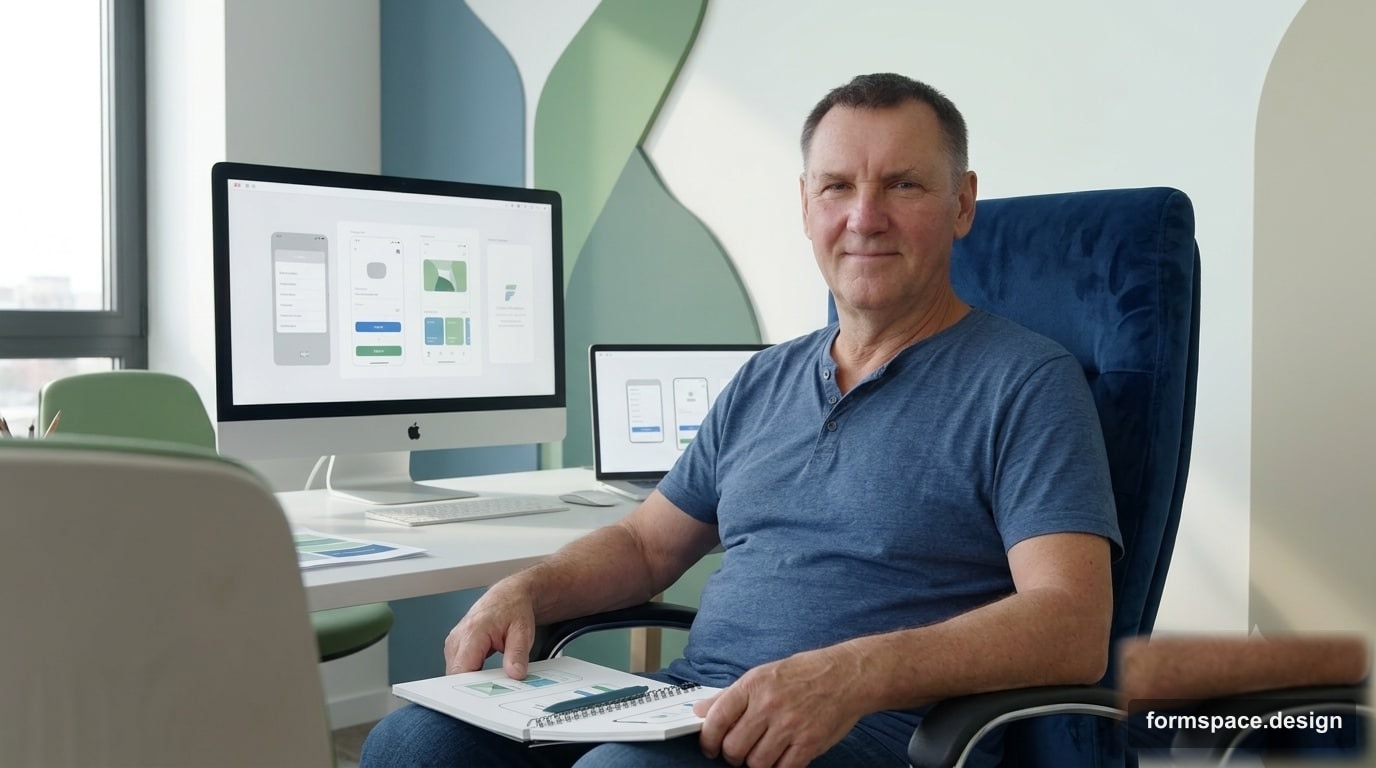
I'm 61: How I Started Anew and Why I'm Building formspace.design
formspace.design founder, former director of "Dom i Sad" (2000–2022), started coding with AI at 61 to build formspace.design solo, without a dev team. An honest journey.
I'm 61. I'm not writing this for drama — it's just more honest this way. After more than twenty years of leading my firm, the halt of my usual business operations, relocating, and "rebuilding myself," I'm starting anew: creating formspace.design — a browser-based tool for plot planning, AI concepts, and design from photos. An important clarification right away: at 61, I started coding with AI and am independently developing this project — without a team of programmers. Below is not an advertising manifesto, but a journey: where I came from and why this start is accessible not only to "IT specialists."
Who I Am, Factually, Without Legends
I am Volodymyr Vybornyi. In my youth — basketball and drawing. From 1982–1986, I studied at the Dnipro State Institute of Physical Culture (DSIPhC) and simultaneously pursued painting at the Yuri Gagarin Students' Palace of Culture studio under the tutelage of M.F. Pushnoy. In 1984, I won 3rd place at the Young Artists Exhibition at VDNKh in Moscow. Later, I taught disciplines at the Department of Theory and Methodology of Physical Education and coached a children's team.
My second higher education was in Enterprise Economics (Kyiv Institute of Municipal Management and Business, 1988–2000). In the 1990s, I journeyed through NPF "Alkar" and "Alkar-Invest": business plans, management accounting, task setting for programmers, advertising, video, telecom, concrete "artificial granite" for landscaping. From 1997, I entered the landscape industry.
From 2000 to 2022, I founded the company "Dom i Sad" (House and Garden) and served as its director. I managed a firm that designed and built cottages, landscaped plots, and maintained them after completion. This was a full cycle: from sketch and estimate to planting and care — not just "consultations on paper." From 2002, I also designed projects myself and trained landscape designers and young architects. Our drafting tools included AutoCAD, then Revit and 3ds Max.
This isn't an "Instagram success story." This is long-term practice: plots, clients, crews, rework, late-night calls, another plan.
Why Landscaping "Stuck" Forever
Knowledge of biology and sports facilities from DSIPhC plus landscape painting — a strange but effective combination. On a plot, it's not just about "pretty bushes," but also people's movement, insolation, slope, water, and plant growth after 5–7 years. A painter looks at the same things: composition, rhythm, negative space. Over the years at "Dom i Sad," I saw hundreds of projects — from small 6–12 hundred square meter dachas to complex terrains. And I saw how a "beautiful picture" without a working plan turns into rework and disputes with contractors.
Along the way, there were industry affairs: the Union of Planting Material Producers of Ukraine, the Guild of Landscape Entrepreneurs of Dnipropetrovsk Oblast (I was president), the Ethno-center "Kozak Khutir Halushkivka" — history, ceramics, painting, and landscape all in one place. formspace.design grew from the same need: to consolidate the scattered experience of a practicing director into one understandable tool.
How I "Got Behind a Computer" Long Before AI — and What Changed at 61
Even back at "Alkar," I set tasks for programmers regarding management accounting. Then came years of CAD. I did not become a software engineer by diploma — and I don't pretend to be. But I know the pain of a director without proper tools from the inside: Excel instead of CRM, the foreman's notebook, "eyeball" estimates, the client changing the terms of reference at the third meeting.
In 2016, I worked with marketing automation (TimeDigitalMarket) and with the rolled lawn producer MaxGreen. Even then, it was clear: a landscape firm doesn't need "40 more buttons," but a simple workflow — from application and questionnaire to plan and visual.
Now, at 61, I've gone further: I started coding with AI and am personally building formspace.design — the architecture, module logic, and edits — without the help of in-house programmers. Not because "it's trendy," but because otherwise, the idea would again get stuck in someone else's task queue. AI here is a partner: I formulate the task from practical site experience, the model helps write and correct the code, and I review it through the eyes of a director and designer.
And yes — anyone can do this who has subject matter expertise, discipline, and a willingness to learn every day. You don't need the legend "I've been coding in assembly since childhood." You need a clear pain point (like mine — plan, zones, visuals, accounting) and perseverance. Age doesn't preclude a start: at 61, I have the filter of experience that I didn't have at 25.
2022–2023: "Dom i Sad" Halts and a New Path Emerges
After the war began in Ukraine, my usual business stopped — including the operations of "Dom i Sad," which I had managed since 2000. I created vibornyi.com, continued teaching Revit, 3ds Max, and AI online, participated in exhibitions, and maintained an art studio. From 2023 — Switzerland (S status), a Russian-speaking group in the art studio, French language. And in parallel — independent development of formspace.design.
A crisis at 61 isn't "all is lost." It's a moment when the old scenario is closed, but there's still plenty of energy and experience. formspace.design for me isn't a retirement hobby. It's an attempt to close a gestalt: to create a tool that I lacked for over twenty years on real cottages and plots.
What I Learned About "Too Late to Learn"
"Too late at 60" is a convenient excuse. In reality, at 61, I have what I didn't at 25: noise filtering, discipline (sports never left), an understanding of which mistakes on a plot cost money. AI and a browser-based planner are new tools, just like 3ds Max once was. The challenge isn't "pressing a button," but explaining to the model what a "conifer corner" means in terms of composition, shade, and growth — not just "draw something pretty."
The same goes for code: AI accelerates, but I make the decisions — as a director who knows where the crew will stumble on site.
How to Plan in formspace.design (Where I'd Start a Beginner Myself)
If you're reading this as a plot owner, start not with a "wow picture," but with the project framework in module 1.x:
- Create a project in your account and fill out the task questionnaire (block 1.1) — style, restrictions, plant stop-list.
- Draw boundaries and upload a base map (satellite / sketch).
- Lay out zones (1.5), then existing objects (1.4) and the new layout (1.6).
- Only after the draft plan, connect the AI concept (2.1) and, if necessary, design from photos (3.1).
For more details — see the formspace.design 2D Planner overview and the guide what to do after receiving an AI concept. Registration: step-by-step registration in formspace.design.
I'm building the product so that a plot owner's journey is shorter than mine once was with a drafting board, CAD, and endless "eyeball" corrections.
An Honest Checklist if You're "Also 50+" and Want a New Project
- Write down what pain point you're addressing (accounting, plot plan, visuals for the family) — not "I want AI."
- Separate biographical facts from market fantasies.
- Focus on one task for 2–3 weeks straight, not ten courses.
- If coding with AI — verify the result with your expertise, don't put it on "autopilot."
- Show a draft to a real person before aiming for "perfection."
- Make room for sports and creativity — otherwise, burnout will arrive faster than the release.
FAQ
Is this an advertisement for formspace.design disguised as a biography?
No. formspace.design is my current working project, and I'm writing about it directly. This article is about the journey of the director of "Dom i Sad," the decision to start at 61, and independent development with AI. Product features are covered in separate instructions.
Do you really write the code yourself without programmers?
Yes: I am developing formspace.design independently, relying on AI as a tool. I don't pretend to be a senior developer with twenty years of IT experience. I am a landscape and business practitioner who has learned to set tasks for the model and bring the product to fruition. And I repeat: anyone can do this who is willing to learn and not give up in the second week.
Why didn't you "just hire a team of developers"?
Because I've seen ideas drown in others' priorities and "clarifications of the terms of reference." It's important to me that modules grow from real-world plot and studio scenarios — questionnaire, zones, objects, inventory, visuals — not from an abstract "let's build a SaaS."
Can one master AI and coding without a technical education?
Yes, if you have subject matter expertise and daily practice. AI empowers those who understand the garden, the plan, and the client. Without this, you get a collection of beautiful but useless pictures — or code that "works" until it encounters a real plot.
What changed with the war and the halt of "Dom i Sad"?
The operations of the firm I managed from 2000 to 2022 stopped. I had to reassemble my practice: online learning, painting, language, a new product. It was difficult — and it also provided focus on a tool that isn't tied to a single office.
Do you still design plots "manually"?
The experience and eye — yes. The tools change: from tape measure and graph paper to CAD and now a browser with AI. The essence remains the same — to agree on a solution before the shovel hits the ground.
Why do you have a blog if you have a product?
To speak with plot owners and colleagues without bureaucracy. And to document lessons: what works in a prompt and in code, what breaks in zoning, where people "get stuck" on the way to their first plan.
What's next in this series?
I'll be sharing step-by-step: from the first prompt and fear of AI to formspace.design modules, automation, and launch mistakes. Unvarnished — with what I've already experienced as a director and as a person who started coding at 61.
Conclusion
At 61, I'm not "starting from scratch" — I'm starting the next layer of the same work: landscape, people, tools. Twenty-two years at "Dom i Sad" (designing, building cottages, landscaping, and maintenance) is the foundation. formspace.design is a bet that a practitioner's experience can be packaged into an intuitive web tool, built with my own hands using AI. If this path resonates with you — visit formspace.design, create your first project, and tell me where you stumbled. This is important to me not for statistics, but for the next version of the product — the one I will again finish myself.
Published:
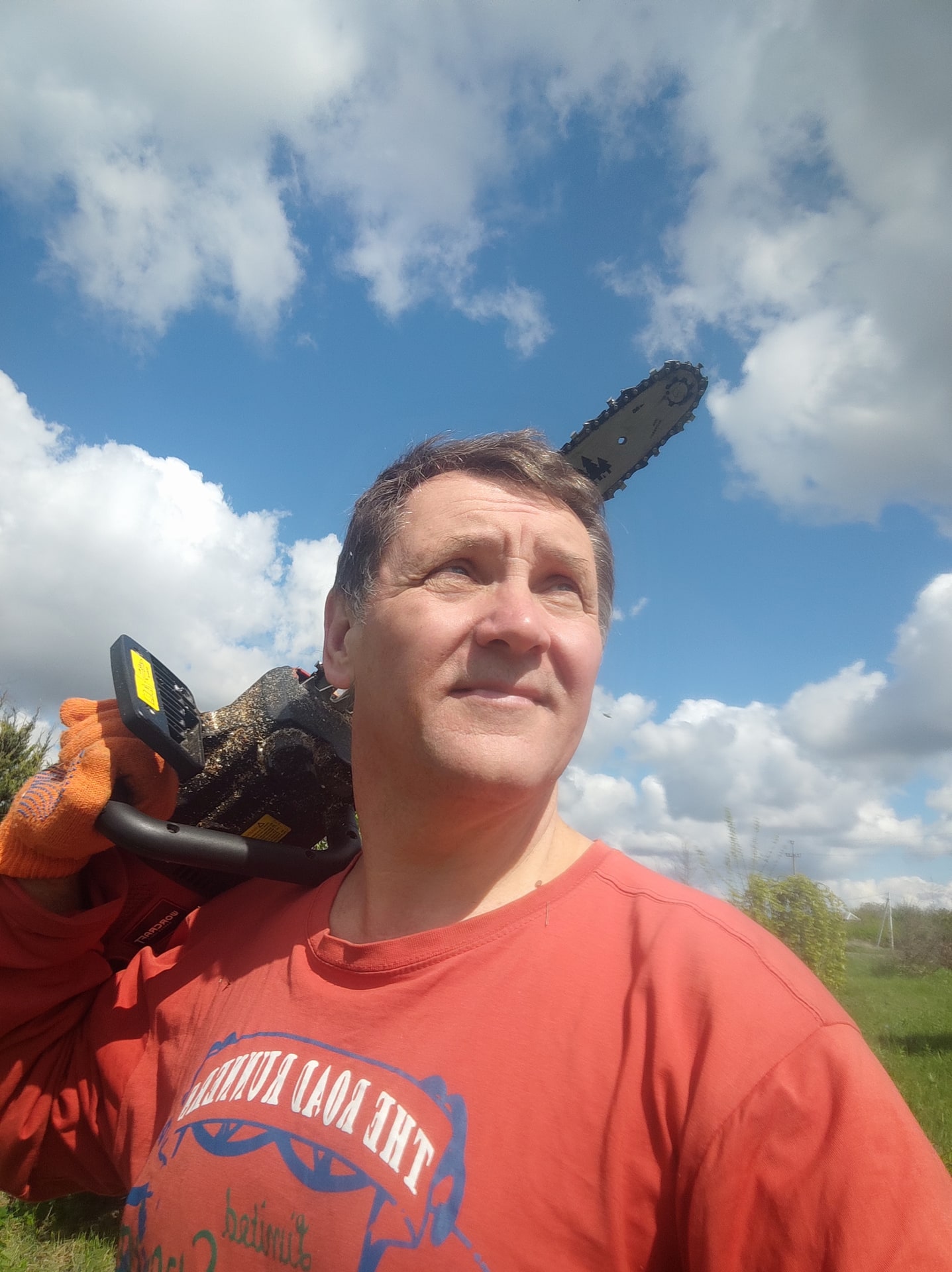
Volodymyr Vybornyi
Landscape designer, founder of https://formspace.design/
Writes about landscape design, business, and modern computer-aided landscape planning tools, including AI.